
Untitled Portrait
BY: Richard III
(2012)
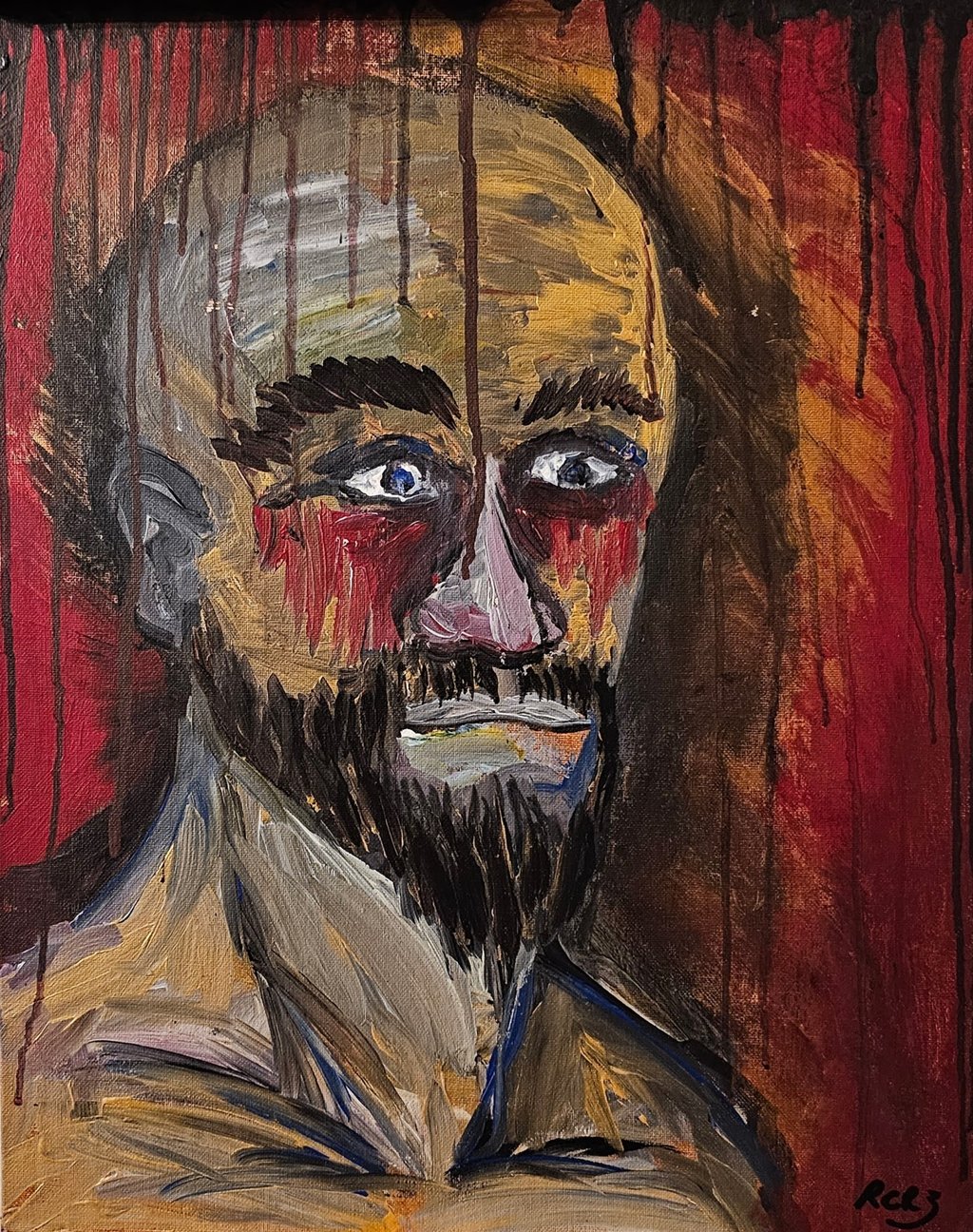
Untitled Portrait
By: Richard III
Medium: Acrylic on Canvas Panel
Dimensions: 16in x 20in
Year: 2012
Status: Private Collection / Available
Untitled Portrait
The visual landscape of this portrait is defined by a heavy, textured application of paint that suggests a face deeply weathered by the passage of time. The downward pull of the beard and the prominently furrowed brow create a palpable sense of gravity, reflecting a weight that is as much emotional as it is physical. This sense of lament is mirrored in the background, where the specific hue of red—reminiscent of oxidized blood—is streaked with dark, vertical drips. These lines do not merely represent the weeping of tears, but a more profound weeping of vitality. It is a visual shedding of the spirit, where the subject appears to be losing a sense of essence and life-force. This imagery suggests a state where the body and soul are leaking their very substance into the surrounding environment, drenching the figure in a "Hollow" experience that is both morbid and sacrificial. Yet, despite this depletion and the physical markers of age, the eyes remain wide and luminous. There is a "High Heaven" quality in this gaze, representing a reaching for grace that persists even as the subject's earthly vitality seems to drain away.
After observing the physical toll and the persistent resilience in the portrait, the connection to Job from the Book of Job becomes the natural spiritual anchor for the work. Much like Job sitting among the ashes while maintaining his integrity, this figure appears to be in the process of scarring and sealing his own spiritual state, refusing to be defined by the tragedy surrounding him. The portrait captures the central tension of Job’s story: the coexistence of deep, earthly lamentation and the loss of all worldly essence with an unwavering refusal to abandon a higher hope. He serves as an unsanctified mirror of every person who has felt abandoned by life yet remains expectant of God. By depicting an older man in a state of spiritual weeping, the painting speaks to the longevity of this struggle, showing that even when one is stripped of their vitality in a fallen world, the spirit can still be directed toward the Father for ultimate restoration.
Created nearly a decade before the artist’s own self-portrait, this work represents a time when he could not yet fully see himself. Instead of a direct likeness, he rendered a visible manifestation of his internal feelings—a portrait not of a specific person, but of a blind emotional state. By manifesting these intangible sorrows into a physical being, the artist was able to process his emotions through the face of another before he was ready to confront them in himself. The attributes and techniques captured here—the weight, the bleeding streaks, and the enduring gaze—serve as an artistic precursor, eventually bleeding into his later personal works. This portrait acted as a necessary bridge, allowing the artist to visualize and externalize a spiritual state years before he would ultimately recognize those same attributes within his own reflection.